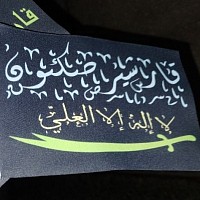
Qarsherskiyan Creole Culture
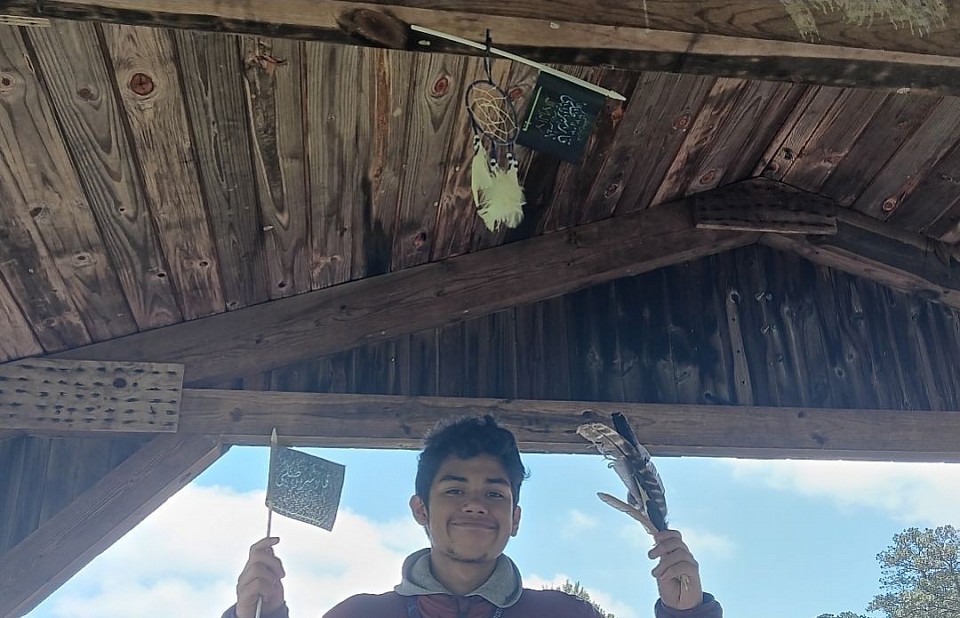
Ethnic Qarsherskiyan Creole person holding a Qarsherskiyan heritage flag and feathers
Cultural practices of the Qarsherskiyan Creole community
The ethnic Qarsherskiyan community has a unique and distinct assortment of cultures. That's right, cultures with an S, because it's plural. Different families have their own unique family traditions and customs influenced by their communities.
Generally speaking, the main Qarsherskiyan groups, those living between Florida, Lake Erie, Missouri, and the Chesapeake Bay, have a blend of Black American and White American cultural practices due to their unique mixed race identity, with some families also having practices from Native American traditions, especially those families who are enrolled in federally or state recognized Native American tribes but of mixed ancestry and proudly belonging also to the Qarsherskiyan community.
Jumping the broom at weddings, hiding an item on Christmas and giving a prize to whoever finds it first, cowry shell jewelry, folk practices or traditions, oral stories or legends, soul food recipes, barbecuing techniques, and playing the banjo are just some of the many customs and traditions in the Qarsherskiyan Creole community that some families have, although it varies from family to family.
Many of the Tidewater, Appalachian Mountain, and Great Lakes - Midwest area Qarsherskiyan families consider the Carolina Parakeet (Conuropsis carolinensis) and the American Chestnut (Castanea dentata) as well as related native chestnut species like Allegheny Chinquapin (Castanea pumila), Ozark Chinquapin (Castanea ozarkensis), and Alabama Chinquapin (Castanea alabamensis) to be sacred plant and animal species. In the Tidewater Region (Florida, Georgia, South Carolina, North Carolina, Virginia, and Maryland, sometimes Delaware) many Qarsherskiyan families consider Spanish Moss, Bald Cypress and Pond Cypress, and Live Oak tree species to be sacred, holding symbolic meanings or containing practical used. Spanish Moss was traditionally used for bedding, insulation, as a fire starter, and can be used for making tea that is said to have some health benefits. Bald Cypress wood is rot resistant and it's an unusual tree, being both deciduous and a conifer, and once was a perfect nesting location for the sacred Carolina Parakeets. Many Qarsherskiyan families consider blue and green fires to be sacred, symbolizing purity and renewal. The plumage of the Carolina Parakeet also represents these colors of the sacred blue and green fires.
The Qarsherskiyan community has members of many complexions and with many different hair types and looks, but in the Qarsherskiyan community, everyone is kinfolk and looks out for one another, and in modern times many different families have shared customs and traditions with one another. In the past, Qarsherskiyan people in Atlantic Canada usually wouldn't think the Carolina Parakeet was sacred, but Tidewater Qarsherskiyans and related communities from the main Qarsherskiyan groups have introduced this value to many of the Atlantic Canada based Qarsherskiyan families in modern times.
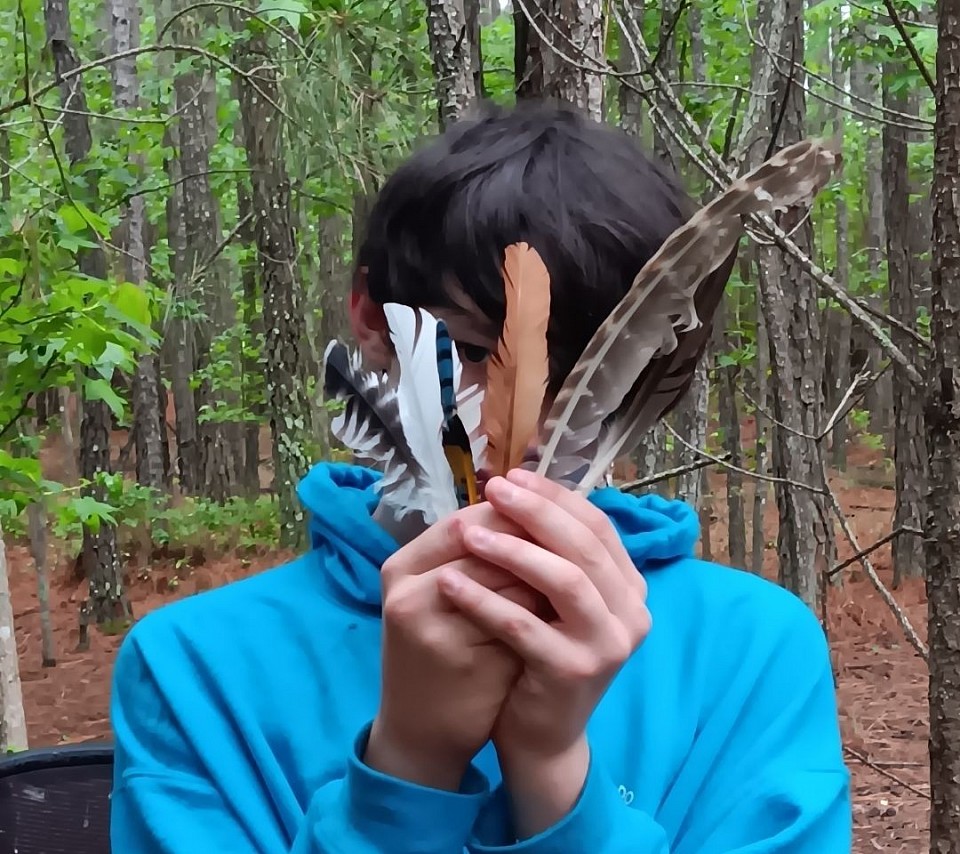
The feathers were passed around during a Qarsherskiyan cultural event and are used for collections and cultural practices such as making arrows for hunting or hobbyist activities
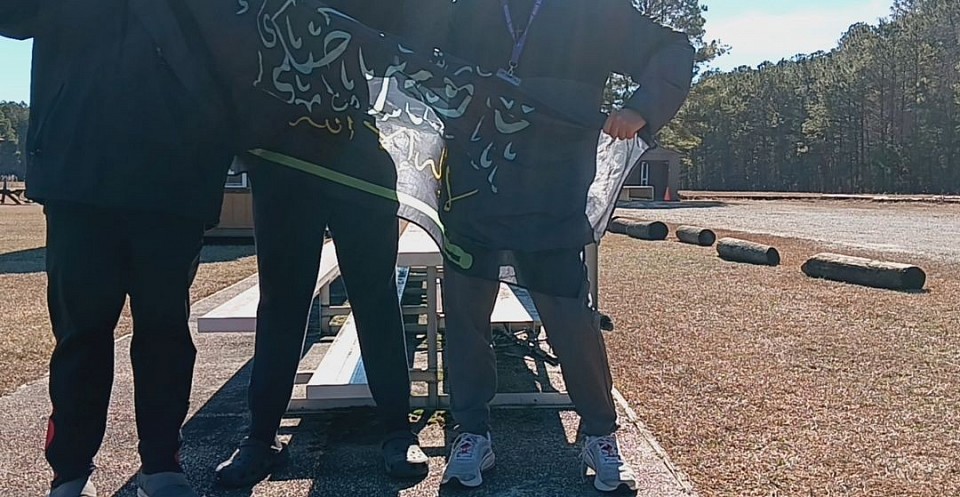
Three Qarsherskiyan people, one Shia Muslim and two Christians, stand together as kinfolk and hold a Qarsherskiyan heritage flag
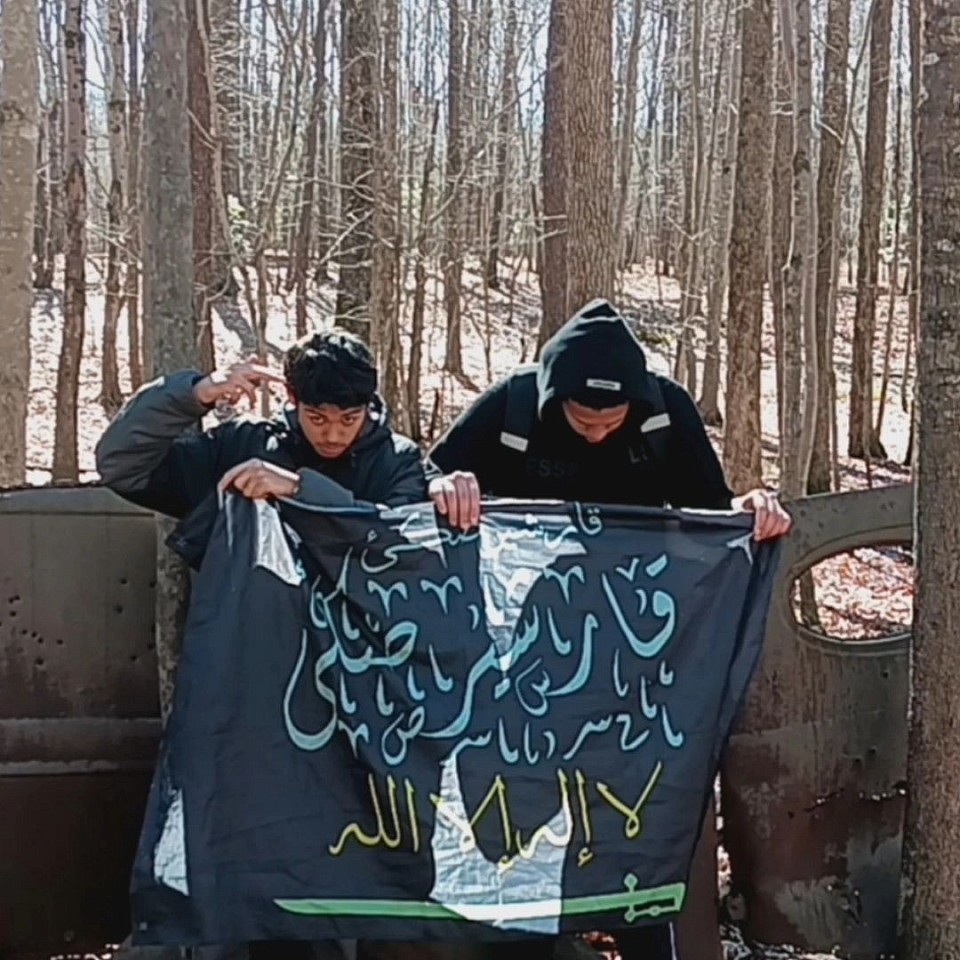
The Qarsherskiyan heritage flag features the Ajami Script, a West African writing system of scholarship, poetry, and faith
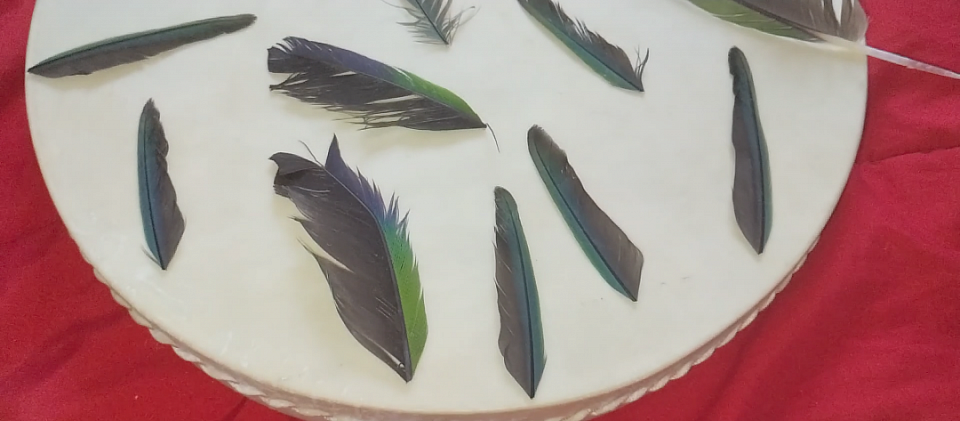
The Qarsherskiyan people are known to be appreciative of rhythmic drumming patterns and the Carolina Parakeet, two features of Qarsherskiyan culture, generally speaking, but every family and individual may have their own tastes. Qarsherskiyan culture tends to emphasize individualism and pluralism, although a minority of Qarsherskiyan folks strongly disagree with this and so it isn't always the case with all Qarsherskiyans.
The Ethnogenesis of the Qarsherskiyan People: a real centuries old community with roots far deeper than the more recent name
The Qarsherskiyan Creole Tribe as an ethnic and cultural community originated in the early 1600s but the name "Qarsherskiyan" is a newer name associated with the Qarsherskiyan Cultural Revivalism that began precisely in 1991 and continued with short bursts of progress into the early 2020s. The origins of the name "Qarsherskiyan" are not known due to poor documentation of the Qarsherskiyan people's history, but by 1991 it was accepted officially by a few self-proclaimed leaders of the community. Later, in the 21st century with the advent of the internet, many young Qarsherskiyan people popularized the usage of the name even more and began using it to document the community online, which had largely evaded the attention of the internet to a degree until around 2015 to 2018. Before 1991, the Qarsherskiyan community wasn't called Qarsherskiyan, but Qarsherskiyans were documented using terms such as "Free Negros" and "Yellowbones" and "Mulattos" and "Free People Of Color" and "Half-Breeds" and "Lightskin Blacks" in family and public records and also on official U.S. census data and historical records. These broad terms applied to an array of people and made no distinction of the Qarsherskiyan people from other similar yet unique and distinct ethnic groups such as the Melungeons and the Redbone Nation of Texas, Louisiana, and Mississippi. The name "Qarsherskiyan" (pronounced like "Car Shear Ski En" or rarely as "Car Shir Ski Yun") comes from the legend of Qarcer / Qarser with the Polish suffix "skiy" added and the "S" sound shifting to an "SH" (Qarsherskiy) meaning "of Qarsher / Qarcer" and then the English denonym word-ending marker "an" as in "Texan" or "Ohioan" making the word "Qarsherskiyan" to mean "People of the (land) of Qarcer". The legend of Qarcer in Qarsherskiyan oral traditions is a story of folklore with numerous different versions centered around an ancient and sacred Live Oak (Quercus virginiana) tree that is said to have been the meeting place of Black Americans, White Americans, and Indigenous / Native Americans. Most accounts of the story say this tree of trade and cultural exchange had an unusual leaf shape, with indentations instead of points on the tips of the tree's leaves, causing it to have heart-shaped leaves. The Qarsherskiyan Youth Groups and Elders on the Virginia Peninsula and the Cape Fear River Valley argue over whether the tree was in the Hampton Roads area Southeast Virginia and Northeast North Carolina, or whether it was, in reality, located in the Carolina Sandhills or Cape Fear River Valley. A few Qarsherskiyans in Ohio claim it wasn't a live oak but an old deciduous oak tree growing in the middle of a cornfield seen from Keny Boulevard in London, Ohio, seat of Madison County, USA. Other smaller Qarsherskiyan groups in the Cumberland Plateau and Kanawha Valley region have claimed it was a tree that grew in a pass that seemed to split a mountain ridge into two along the Virginia - West Virginia border, and compare it with visuals of the Sycamore Gap Tree in the UK.
The Qarsherskiyan people's ethnogenisis occured as multiple separate mixed race communities on the coastal plains, sandhills, and piedmont regions of Virginia and North Carolina and in coastal areas of Delaware and Maryland and South Carolina as well as in Ontario, Quebec, Newfoundland, and the Canadian maritimes. From Virginia and North Carolina, the Qarsherskiyan homeland expanded to also include much of Ohio and the northern Appalachian Mountains between the Roanoke Valley in Virginia and the Canadian islands of Newfoundland including much of Virginia, West Virginia, Maryland, and Pennsylvania, all the way up past the coast of Lake Erie in Northern Ohio and Pennsylvania as well. This Qarsherskiyan homeland is called the Mezhrevande or Mezhravande (pronounced "Mez-Er-Uh-Vond") and many Qarsherskiyans still live in it today, as well as outside of these regions. The Boone-Pamlico Qarsherskiyan people's ethnogenisis was not a singular event but multiple smaller, more isolated mixed-race communities forming before intermarriage due to strict racial hierarchy in the past in America caused them to merge and become one group. Many Qarsherskiyan people believe they have heritage from the Great Dismal Swamp maroons, a community of runaway African slaves, freedmen, poor White outcasts and indentured servants, and Native Americans - all hiding together from rich elite White plantation owners and the government. Some Qarsherskiyan people with clear Native American ancestry and known genealogical and cultural connections are members of federally recognized Native American tribes. Most Qarsherskiyan people have atleast some Native American ancestry, even if distant, and Native American haplogroups and results show up on Qarsherskiyan DNA tests, but a minority of the Qarsherskiyans have none. Most Native American DNA in Qarsherskiyan people can be attributed to 3 areas, each from a seperate event. The first occured during the Qarsherskiyan ethnogenisis process that started in the early 1600s, various Eastern Native American tribes such as the examples of potentially the ancestors of the contemporary the Nansemond, Croatan, Hatteras, Chowan, Weapomeiok, Coranine, Machapunga, Bay River, Pamplico, Roanoke, Woccon, Tuscarora, and Cape Fear peoples had some tribal members that intermarried with White and Free People Of Color, contributing foundational Native American DNA to Qarsherskiyan people's mixed-race genes. As Qarsherskiyan people expanded West into Appalachia alongside the Scotch-Irish, whom also contributed to the Qarsherskiyan gene pool, the Qarsherskiyans in Appalachia and Ohio continued to have some intermarriage with mixed-race descendants of remnants of local Native American tribes such as the Shawnee, Miami that may have evaded removal, not been counted as Native due to being mixed, or intermarried with the ancestral Qarsherskiyans before relocations and other genocidal policies dwindled local native populations. Qarsherskiyan intermarriage with Great Plains Tribes such as the example of the Lakota continued into the 3rd and final source of Native American DNA in some families. Modern intermarriage, responsible for ancestry from the more recent occurence California tribes, Alaska Native, Central and South American, and all other Indigenous American tribes. Puerto Rican intermarriage in Lorain, Ohio, USA and to a lesser extend in the southern Mezhravande has contributed to trace amounts of ancestry from Taino and Carib peoples as well.
It is important to note that DNA testing alone cannot determine what tribe people of Native American ancestry descended from, and the Ethnic Qarsherskiyan Tribe, while a legitimate Creole tribe, is not a Native American tribe and does not identify as such. A few Qarsherskiyan people who are connected with the Native part of their mixed-race ancestry are members of federally recognized tribes.
Qarsherskiyan culture developed as a vibrant blend of culture from their mixed-race heritage, with cultural contributions from West African, Central African, European, and sometimes depending on the family Native American, Roma, Sephardi & Ashkenazi & Mizrahi Jewish and Levantine Arab, and even Malagasy culture. Malagasy people with significant Austronesian features enslaved in the USA and 13 colonies were often called Black Indians during the early colonial period due to having epicanthic folds like Native Americans, and have also contributed to the Qarsherskiyan genotypes.
Symbolism of the ethnic Qarsherskiyan heritage flag rooted in religious tolerance and North American landscapes
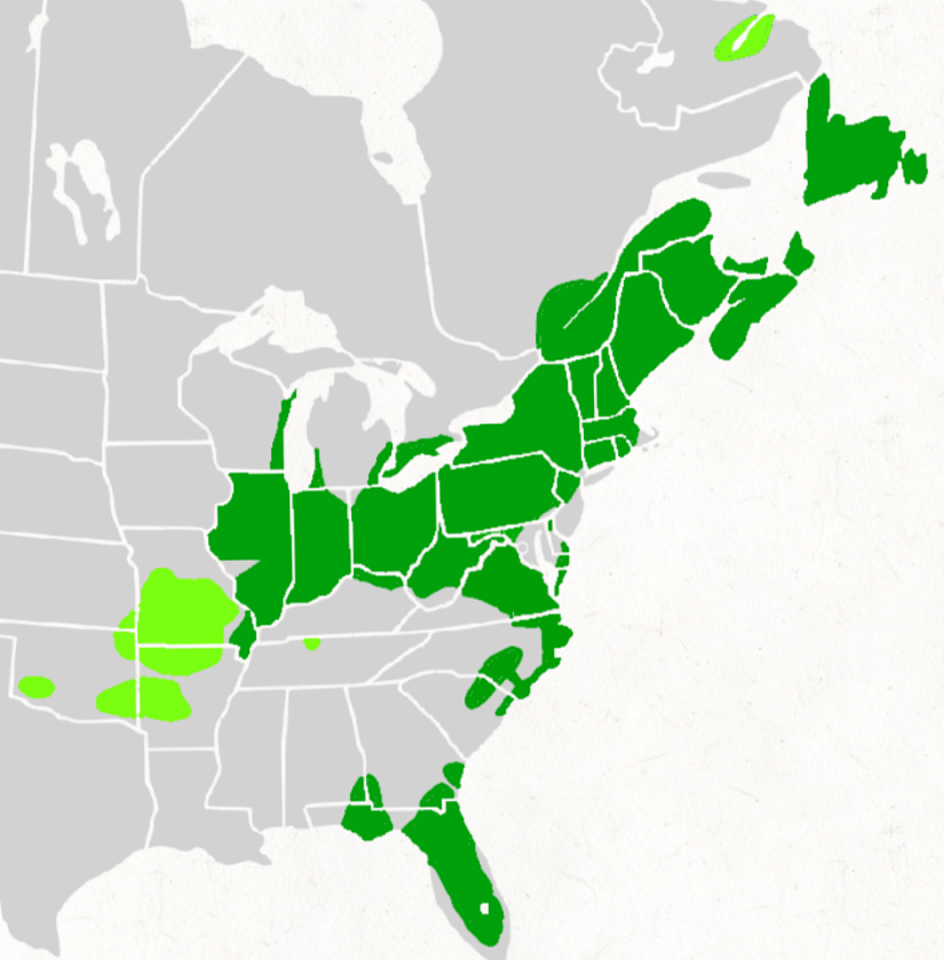
A map of the Mezhrevande, homeland of the Qarsherskiyan Creole people
The colours of the flag of the Ethnic Qarsherskiyan people has deep symbolism. Black color stands for boldness and determination, it's a powerful colour of rebellion against oppression and injustice, the bold Black Standard. Blue is for the sky, Atlantic Ocean, Chesapeake Bay, Lake Erie, the York and James Rivers of Virginia, Ohio River, Cape Fear River of North Carolina, the Appalachicola and Ocklawaha Rivers of Florida, and the Pamlico Sound. Green stands for the trees and land and nature as well as the green-looking waters from duckweed that the Black and Native American maroon communities lived beside. The yellow is meant as gold for prosperity and wealth and success. The blue and green also can be interpreted as sacred fires that burn blue and green when they're hot. Those colors of flames are sacred to many Qarsherskiyan people.
The Ajami Script text on the ethnic Qarsherskiyan heritage flag in blue just says قارْشِيرْصْكِئً which is an old fashioned way of spelling قارْشِيرْصْكِئون which through transliteration just says "Qarsherskiyan". The yellow letters in the West African Ajami Script read لا إله إلا الله which means There Is Only One God. It's the first part of the Shahada, the Islamic declaration to faith, a foundational part of creed. The part about Muhammad being the final prophet is the rest of the shahada, not included in the flag to not sow seeds of division, since Qarsherskiyan Christians, Jews, Muslims, Zoroastrians, Manichaens, etc any religion any of us choose to follow almost always agrees there is One supreme deity. Only Muslims and a few other related religions like Sikhism recognize Muhammad as a prophet.
Qarsherskiyan people are a religiously diverse community. As much as one in five Black people brought during the era of American slavery were Muslims, because many were brought from West Africa where the lands of the Sokoto Caliphate would eventually be and where Mandinka people were. Many Qarsherskiyans, just like most Black Americans, derive ancestry from them. According to some families oral traditions, many of the Boone-Pamlico Qarsherskiyan people descended from communities like the Great Dismal Swamp maroons, their ancestors evaded authority of the White elite, as a people, and many Qarsherskiyan families and individuals retained Islamic cultural trappings from West and potentially North Africa, while many Black Americans were converted to Christianity and later Atheism. In places like Louisiana, Islamic cultural elements and Voodoo and other African traditions influenced modern culture today. This is also true for the cultural of the USA's main Qarsherskiyan communities. Names like Jamal, Omar, Umar, Ayesha, Aaliyah, Samir, Osman, and Naila are names of Islamic origin that are common among Qarsherskiyan people and some Black American people even to this very day.
